
The Peacoat and the Kabig: Two Coats with Maritime Roots
Today, the peacoat and the kabig can be seen both on the runways and on the streets, in the city and by the sea. But what are the origins of these two iconic maritime coats?
The authentic peacoat first appeared in the 15th century among early European sailors. Designed to withstand wind and sea spray, it gradually became standard issue in navies during the 19th century, particularly in the Royal Navy, before being officially adopted in France in 1848. Its short silhouette and double-breasted design soon became iconic.
The kabig, on the other hand, is deeply rooted in Breton tradition. Originating in the 19th century in Finistère, it was created by seaweed harvesters to protect themselves from the elements. This hooded sailor’s jacket, made from thick woolen cloth, would eventually become a symbol of Breton identity and maritime craftsmanship.
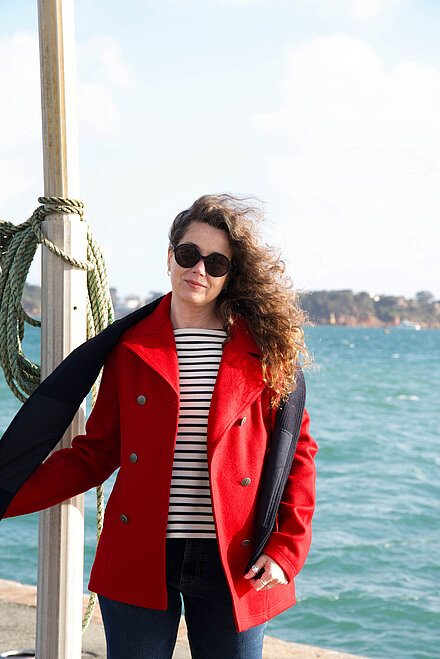

The peacoat and the kabig: two warm and durable coats
What the Dalmard Marine peacoat and kabig have in common is their wool fabric. Naturally insulating, breathable, and water-repellent, wool effectively protects against the cold while allowing the body to breathe. It retains heat without causing overheating, offering exceptional comfort for everyday wear.
The density and quality of the wool fabric allow for the creation of durable coats, designed to elegantly withstand the changing seasons. Whether it’s a sailor’s peacoat or a Breton kabig, these pieces remain winter wardrobe essentials.
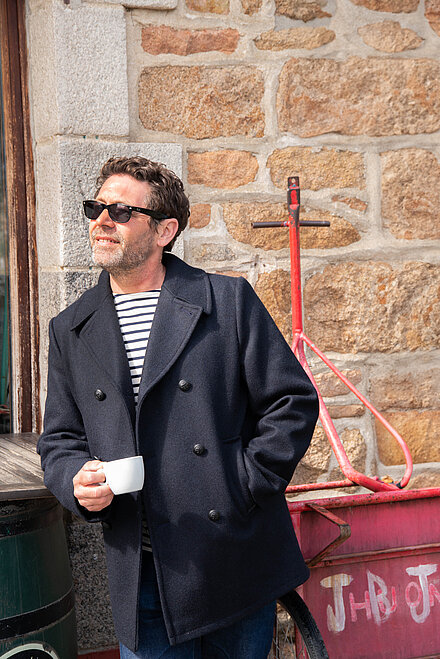

The peacoat: an elegant and timeless silhouette
A true everyday staple, the peacoat stands the test of time without losing any of its elegance. This sailor-style coat captivates with its structured and timeless silhouette. Depending on body type and desired style, the peacoat comes in different cuts: straight, fitted, or tailored.
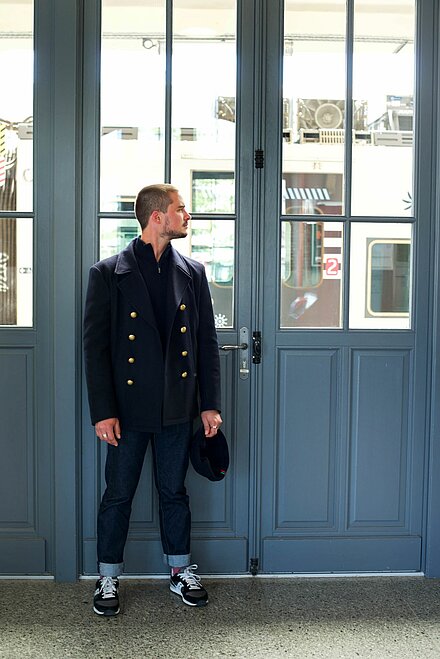
Its wide collar and double-breasted closure provide effective protection from the wind, while its steel buttons adorned with nautical symbols evoke its maritime heritage. Easy to wear, the peacoat complements both casual and more formal looks.

OUR WOMEN'S PEACOAT COLLECTION
our PEACOAT model for children
The Kabig: An Authentic Breton Coat
Looser-fitting and more enveloping, the kabig is distinguished by its built-in hood and traditional details such as wooden buttons. As the successor to the clothing worn by Breton seaweed harvesters, it retains an authentic and functional spirit.
Worn today both in the city and by the sea, the kabig charms with its character and bold style. A true Breton sailor’s coat, it carries on a rich regional history while adapting to modern uses.

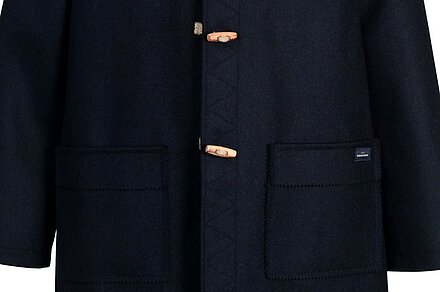
How do you choose between a peacoat and a kabig?
The choice between a peacoat and a kabig depends above all on the style you’re looking for.
Do you like structured silhouettes and timeless elegance?
The peacoat is the perfect choice.
Do you prefer a more authentic look with a distinct Breton flair?
The kabig will be a better fit.
Two coats, two styles, one maritime heritage.
Nautical coats built to last
Designed to last and made entirely in Europe from high-quality materials, Dalmard Marine coats stand the test of time.
Choosing a peacoat or a kabig means investing in a durable, timeless, and sustainable coat: a piece designed to last for many seasons.